
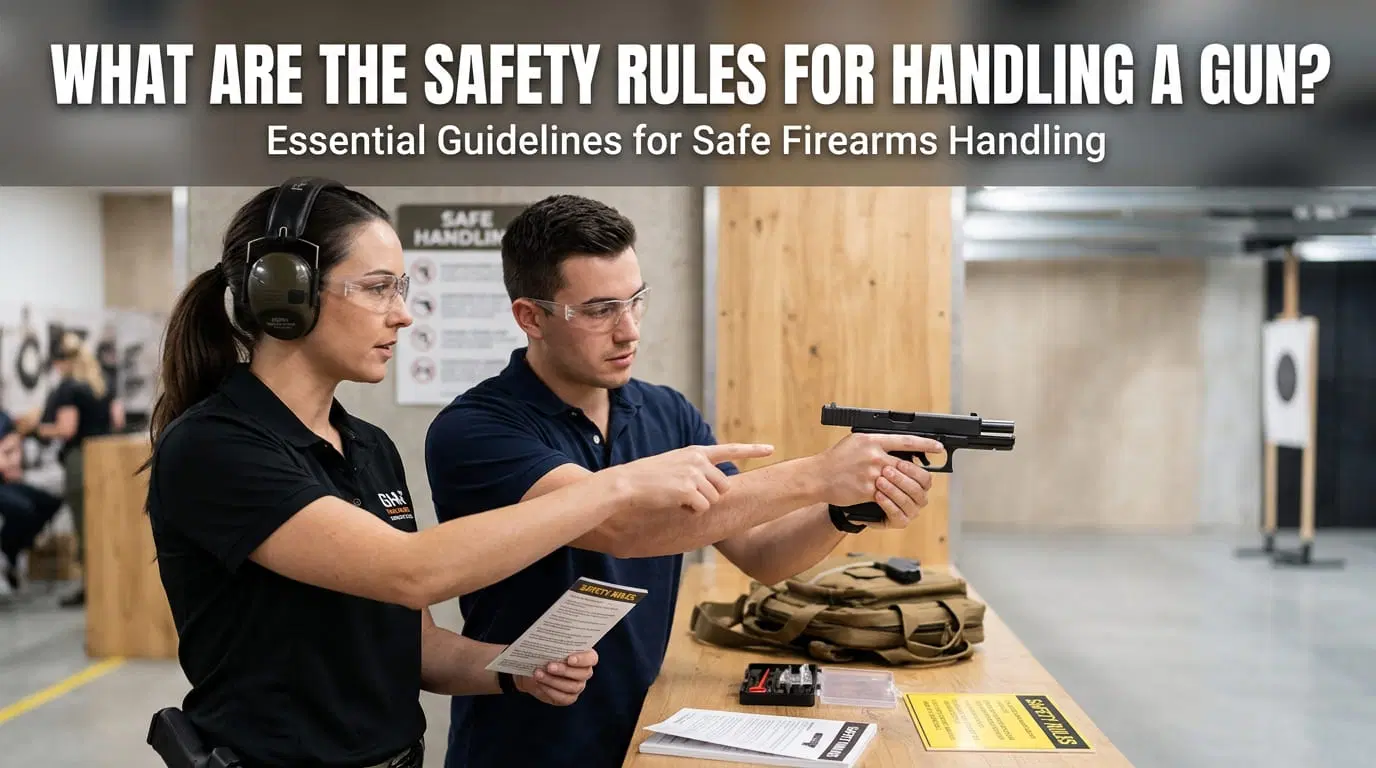
What Are the Safety Rules for Handling a Gun? Essential Beginner Guide
The four core rules of firearm safety are: treat every firearm as if it is loaded; never point it at anything you are not willing to destroy; keep your finger off the trigger until you are ready to shoot; and know your target and what is beyond it. Follow all four every time, even when you believe a firearm is unloaded or are in a familiar setting. Safe handling also includes secure storage, careful transportation, and following the rules of the range or location where you are present.
The four core gun safety rules
1. Treat every firearm as if it is loaded
Do not rely on someone else's assurance or on memory to decide whether a firearm is safe. Keep it pointed in a safe direction and keep your trigger finger outside the trigger guard. If you have not been trained to handle it, do not pick it up; ask a qualified instructor or responsible adult to assist. A firearm's apparent condition does not replace safe handling.
2. Never point it at anything you are not willing to destroy
Keep the muzzle pointed in a direction where an unintended discharge would be least likely to injure someone or damage something. Be aware of the people and objects around you as you move, set down, or receive a firearm. Do not sweep the muzzle across another person, even briefly or while demonstrating that the firearm is unloaded.
3. Keep your finger off the trigger until ready to fire
Rest your trigger finger straight along the frame, outside the trigger guard, whenever you are not intentionally aiming at an appropriate target and prepared to shoot. This helps prevent a startled movement, loss of balance, or other distraction from causing an unintended shot. Keep the same discipline when handling a firearm at home, at a range, or during instruction.
4. Know your target and what is beyond it
Before shooting, identify the target and consider what a missed shot or a projectile passing through it could hit. Never fire at movement, a sound, or an object you cannot positively identify. Outdoor backstops, walls, and other barriers may not stop a projectile. If you cannot confirm a safe target and what lies behind it, do not shoot.
Safe handling habits for beginners
Follow the firearm's manufacturer instructions and the range's commands. Avoid handling firearms when tired, distracted, or impaired by alcohol, drugs, or medication that affects judgment or coordination. Do not handle a firearm while someone else is downrange; wait for the instructor or range officer to declare the area safe. If you are unsure what to do, stop and ask a qualified instructor rather than guessing.
At home, do not handle a firearm in front of children or visitors as a demonstration. Keep it pointed in a safe direction and secure it promptly when it is not in use. If you encounter a firearm you do not know how to handle, do not touch it. Move away and contact a responsible adult or local authorities.
Store firearms to prevent unauthorized access
Choose a secure storage method that prevents access by children, visitors, and anyone who is not authorized to handle the firearm. A locked safe or lockbox can provide a stronger barrier than leaving a firearm in a drawer, closet, or vehicle. Use a properly fitted locking device where appropriate, and follow the firearm maker's instructions for its use.
When a firearm is not in use, store it unloaded and locked, and secure ammunition separately. Keep keys, combinations, and access codes out of reach of unauthorized users. Consider who can access the storage location, including guests and people who may know where keys are kept. A lock is one layer of protection, not a substitute for supervision and careful decisions about access.
Storage needs differ by household. Choose equipment suited to the firearm and your circumstances, and review it regularly to confirm it still works and remains secure. If children may be present, explain that firearms are not toys: they should never touch one and should immediately tell a trusted adult if they see one. Safe storage and clear household expectations work together to reduce risk.
Transport firearms carefully and check current rules
Before traveling, check the current laws that apply to your route, destination, and situation. Firearm transportation rules can depend on factors such as where you are traveling, how the firearm is carried, and whether you have a permit. Do not assume that a method allowed in one place or circumstance is allowed in another. Review the current Virginia firearms laws and Virginia State Police firearms information; seek qualified legal advice when you need an answer for a specific situation.
As a general safety practice, keep a firearm secured in a closed, locked container when transporting it, and keep it inaccessible to passengers who are not authorized to handle it. Do not handle or adjust a firearm while driving or while passengers are nearby. Plan ahead so you can comply with the laws and rules at every stop, including restrictions at your destination. These safety suggestions are not a statement of what the law requires in every case.
Learn with an instructor
Reading safety rules is a useful start, but guided practice helps beginners build consistent habits and learn how to follow range procedures. Find upcoming Northern Virginia gun classes and ask about introductory instruction that fits your experience. You can also explore Safe Firearm Training for Beginners and View Our CCW Courses.
For another reference, review the NRA's gun safety protocols. Use authoritative sources for current legal requirements, and follow the directions of your instructor and range staff. Revisit these rules whenever your routine or environment changes. Consistent safety depends on treating every firearm with care, securing it against unauthorized access, and choosing not to act when you are uncertain.
Ready to Get Certified?
We offer fully compliant, in-person training courses that satisfy Virginia's CCW requirements.
View Our CCW Courses →