
Essential Holster Options & Wardrobe Tips for Everyday Carry (EDC)
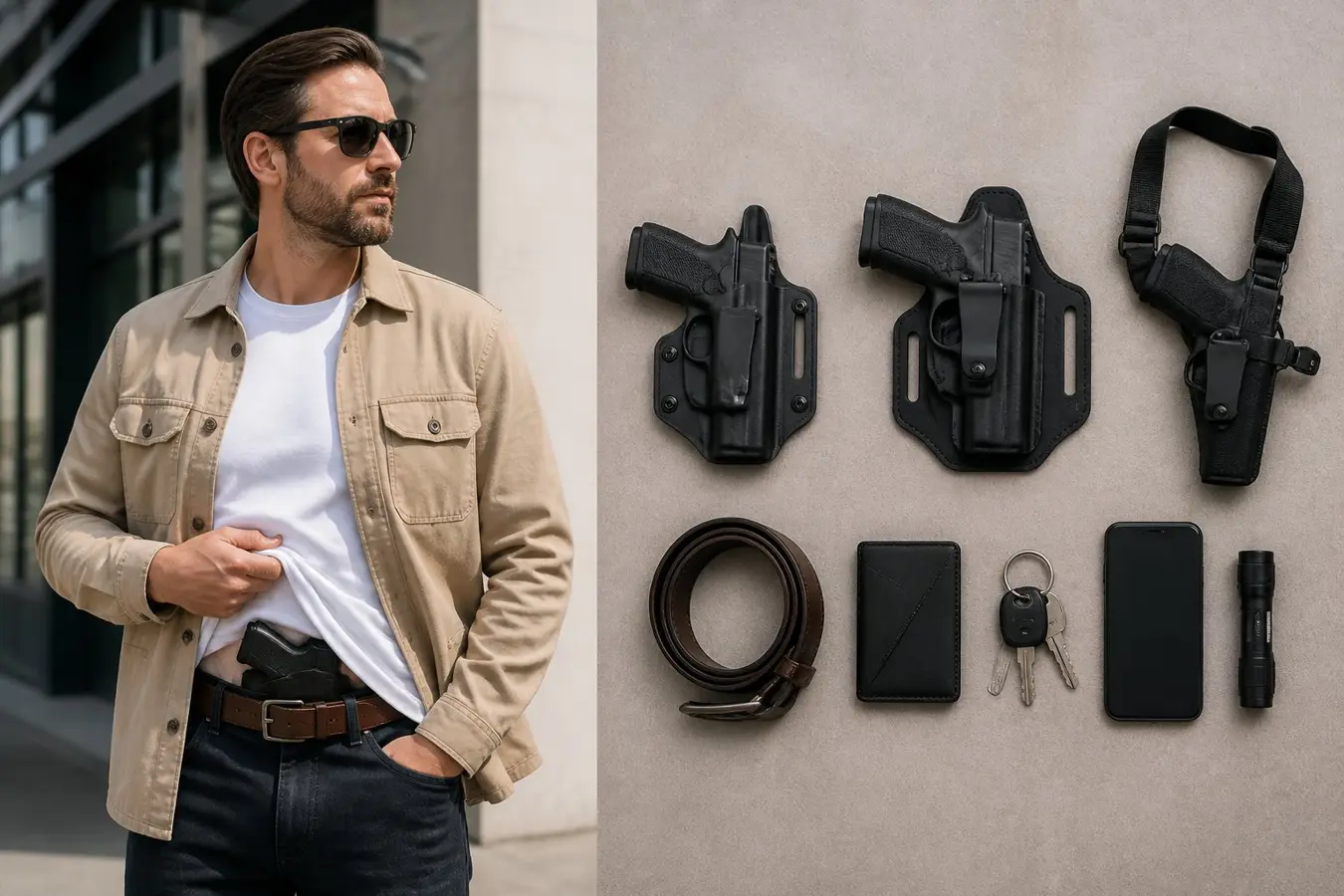
Getting your concealed carry setup just right requires more than just owning a firearm. It’s about finding a setup you can carry comfortably, securely, and discreetly every day.
If your carry setup is uncomfortable or prints through your clothing, you're less likely to actually carry every day. The following guide covers popular holster styles, essential support gear, and some sensible clothing tweaks.
What to Look for in a Holster
To work out which holster will suit you best, consider your body type, the clothing you usually wear, and the typical activities you do every day. Here are the most widely-used holster styles for everyday carry:
1. Inside the Waistband (IWB)
- Best For: Concealment while wearing a t-shirt or button-down.
- How It Works: The holster clips onto your belt and sits inside your pants. You can wear the holster on your side (usually between the 3 to 5 o'clock position) or at the small of your back.
- Pros: Very concealable. Least amount of “printing” (your gun showing through your shirt).
2. Appendix Inside the Waistband (AIWB)
- Best For: Quick access, sitting down, or doing a lot of moving about.
- How It Works: The holster clips onto your belt and sits inside your pants at your front (usually between the 11 o’clock and 1 o’clock position).
- Advantages: Belt support is necessary as it maintains the firearm in your main line of sight and enables easy drawing when you are seated. However, you need to ensure that your holster fits properly and is of good quality.
3. Outside the Waistband (OWB)
- Best For: Carrying in cold weather, when at the range, or wearing a garment that opens (sweatshirts, jackets, suit jackets).
- How It Works: The holster hangs on the outside of your pants and clips onto your belt.
- Advantages: This form of carrying is very comfortable as it doesn't press against your waist. However, you need to wear a longer shirt, jacket/coat.
4. Specialized & Off-Body Options
- Belly Bands & Chassis Systems: Elastic harnesses or modular systems that wrap around your waist and can be easily hidden under clothing and work great with athletic wear, yoga pants, or clothing without belt loops.
- Off-Body Carry (EDC Bags/Packs): Slings or waist packs purpose-built with internal holsters. Ideal for hiking, running, or bad weather, but you must treat an off-body bag like a weapon and never let it out of your control.
The Unsung Hero: Belt Support
One of the most common mistakes is using a serious holster in combination with a dress belt or, even worse, a flimsy fashion belt. Everyday belts commonly found in department stores are not designed to support the weight of a gun, and as a result, the entire holster/weapon/grip assembly leans away from your body and prints on your shirt.
- Draw Rehearsals: Dry fire practice drawing and acquiring your sights with an unloaded weapon in a safe, controlled environment. A little daily muscle memory work dramatically speeds up formal training’s learning curve.
- Clear Leather: Draw smoothly and naturally from your holsters at full speed with zero resistance or hangups.
- Adjustments: Regularly check and adjust gear for comfort, re-tightening or loosening as necessary, balancing a secure fit with easy draw.
Discovering what works best for you typically requires testing a few different clip styles, combined with various cant angles and ride heights. After identifying a comfortable selection, start by regularly wearing your holster around your home to get used to the weight and feel when you engage with your natural draw motion.
Want to enhance your shooting or drawing skills? Send your training inquiries in via the Live Fire Instruction Course Calendar.
Unsure about specific gear setups or new to training? Don’t hesitate to email our instructors at class@livefireinstruction.com.
Ready to Get Certified?
We offer fully compliant, in-person training courses that satisfy Virginia's CCW requirements.
View Our CCW Courses →