
Safe Firearm Training for Beginners
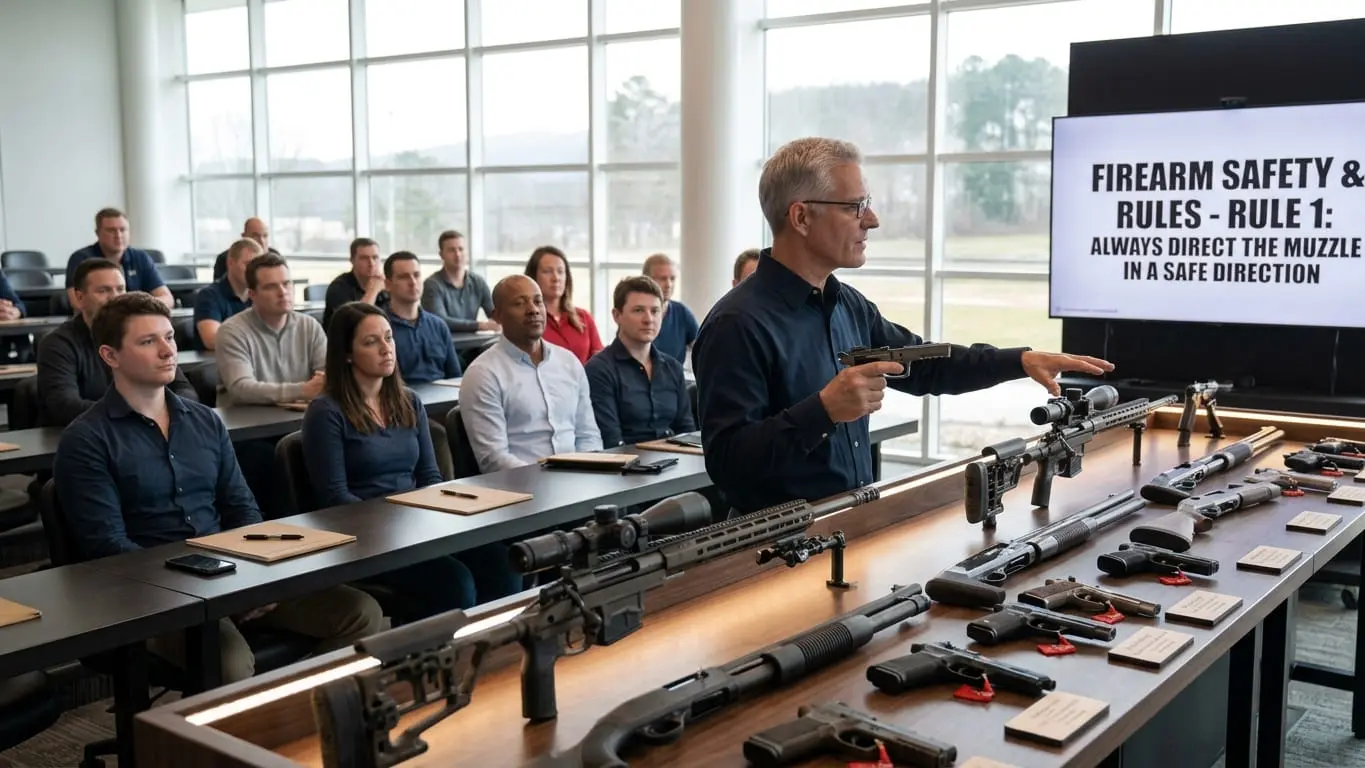
The primary objective of professional instruction is to build a foundation of safety, confidence, and competence. While informal practice has a place, structured firearm training for beginners under the guidance of a certified instructor is the most reliable path to responsible ownership. A professional provides personalized feedback, corrects improper habits before they become ingrained, and creates a controlled, non-intimidating environment for learning. This approach helps you develop a deep respect for the firearm and a commitment to continuous skill development. Your initial training is not a one-time event but the first step in a lifelong practice. The typical progression for a new shooter starts with safety rules and firearm mechanics before moving to live-fire practice and skill refinement. Finding the right professional guidance is a critical first step, and resources are available to help you identify where you can get training as a new gun owner.
Mastering the Four Universal Safety Rules
The core of all safe gun handling techniques is a set of four universal rules. These are not suggestions but absolute principles that must be practiced until they become second nature. They are the foundation of courses offered by respected organizations, and as the National Rifle Association highlights in its curriculum, they are non-negotiable. Mastering these basic firearm safety rules is the first and most important responsibility of any firearm owner.
- Treat every firearm as if it is loaded. This rule eliminates complacency. By assuming a firearm is always loaded, you prevent the vast majority of negligent discharges.
- Never point the muzzle at anything you are not willing to destroy. This is known as muzzle discipline. It ensures that even in the unlikely event of an accident, no harm occurs. At home or on the range, always be conscious of where your firearm is pointing.
- Keep your finger off the trigger until your sights are on the target and you have decided to shoot. Your finger should rest straight along the frame of the firearm, outside the trigger guard. This prevents unintentional firing caused by a muscle contraction or being startled.
- Always be sure of your target and what is beyond it. You are responsible for every bullet that leaves the muzzle. This means you must have a proper backstop and be aware of your surroundings, as bullets can penetrate or miss targets.
Internalizing these rules is the first step toward building the confidence that comes from genuine competence and safety.
| Rule | Rationale | Practical Application |
|---|---|---|
| 1. Treat every firearm as if it is loaded. | Eliminates complacency and prevents negligent discharges. | Always perform a safety check when handling a firearm. |
| 2. Never point the muzzle at anything you are not willing to destroy. | Ensures that even in the event of an accident, no harm occurs. | Maintain muzzle discipline at all times, even with an 'unloaded' gun. |
| 3. Keep your finger off the trigger until ready to shoot. | Prevents unintentional firing due to muscle contraction or being startled. | Rest your trigger finger straight along the frame of the firearm. |
| 4. Be sure of your target and what is beyond it. | You are responsible for every bullet that leaves the muzzle. | Always use a proper backstop and be aware of your surroundings. |
Selecting Your First Firearm for Training

When learning how to choose a first gun, prioritize ergonomics and fit above all else. A firearm that feels comfortable in your hands and allows for a natural reach to the controls is safer and easier to learn with. Before making a purchase, it is highly recommended to rent different firearms at a local range. This "try before you buy" approach allows you to experience the recoil of various calibers and compare different models, such as full-size versus compact pistols. This direct experience is invaluable for making an informed decision based on what works for you, not just on recommendations. Many instructors suggest common platforms like striker-fired pistols for beginners due to their consistent trigger pull and simple operation.
A common misconception is that a smaller, lighter handgun is easier for a new shooter to handle. The opposite is often true. Very small firearms tend to produce more felt recoil, which can make learning marksmanship fundamentals challenging and can encourage flinching. A mid-size or full-size firearm generally offers a more stable platform with less felt recoil, making it a better tool for your initial training. Understanding these factors is part of the rules to purchase your first gun for home defense or general practice.
Core Marksmanship and Handling Skills
Effective shooting is built on a small set of core physical skills. Consistent practice turns these actions into ingrained habits, which is why they are key shooting range tips for beginners. With an instructor's guidance, you can build a strong foundation in each area.
Establishing a Proper Grip
A correct grip is essential for controlling the firearm and managing recoil. Start by establishing a firm, high grip with your dominant hand, ensuring the web of your hand is pressed high against the backstrap of the pistol. Your support hand then wraps around the dominant hand, maximizing surface contact. This two-handed grip provides stability and helps you return to your target quickly after each shot.
Building a Stable Stance
Your stance is your shooting platform. The Isosceles stance is a common and effective starting point. Stand with your feet approximately shoulder-width apart, with your toes pointed toward the target. Bend your knees slightly and lean forward from the waist, putting your weight on the balls of your feet. This athletic posture helps you absorb recoil and remain balanced.
Understanding Sight Alignment and Sight Picture
These two concepts are critical for accuracy. Sight alignment is the relationship between your front and rear sights. For most iron sights, this means the top of the front sight is level with the top of the rear sight, with an equal amount of light visible on both sides of the front sight post. Sight picture is the act of placing those perfectly aligned sights onto your intended target.
Mastering Trigger Control
Poor trigger control is the most common cause of missed shots. The ideal trigger press is a smooth, continuous movement straight to the rear, performed in a way that does not disturb your sight picture. A helpful concept is the "surprise break," where the shot breaks without you anticipating it, which prevents flinching. You can refine these skills with personalized coaching through private shooting lessons.
What to Expect in a Beginner Course
Attending a formal beginner's course can feel intimidating, but it is a structured and supportive experience designed for new shooters. Many modern courses, like those benchmarked by the NRA Basics of Pistol Shooting program, use a blended model that combines online classroom learning with in-person range instruction. The classroom portion is conducted in a safe, dry environment without live ammunition. Here, you will learn the safety rules, firearm mechanics, and marksmanship theory.
The live-fire portion takes place at a shooting range under the direct supervision of an instructor. This is a highly controlled setting where you will apply the skills learned in the classroom. Your instructor will guide you through your first shots, focusing on safe handling, proper operation of the firearm, and building comfort. The goal of a first class, such as our First Step Pistol Orientation, is not to achieve expert status. Instead, it is to build a safe, confident foundation for all future practice. As Shooting Illustrated notes in its review of the NRA Basics of Pistol Shooting Course, this foundational knowledge is key.
Continuing Your Skill Development
Firearm proficiency is a perishable skill built through consistent, deliberate practice, not a single class. View your initial training as the starting point of an ongoing journey. Schedule regular range visits to maintain and improve your abilities. As you gain confidence, seek out further education to continue your development. Reputable training facilities offer a clear progression from basic handling to more advanced courses, such as our CCW courses for those interested in concealed carry.
When selecting an instructor, look for recognized, third-party certifications to ensure you receive high-quality, standardized, and safe instruction. Responsible firearm ownership is an active commitment. It involves practice, education, and an unwavering dedication to safety. These are the true sources of confidence and competence with a firearm.
Ready to Get Certified?
We offer fully compliant, in-person training courses that satisfy Virginia's CCW requirements.
View Our CCW Courses →